Business Travel Guide
The Ultimate Corporate Travel Management Guide for Small Business (2027 Edition)
When a small business first begins to scale, travel management is almost always an afterthought. A founder flies to pitch a client, an engineer flies to a conference, and the process is entirely ad hoc. The employee books a flight on a consumer website like Expedia, pays with their personal credit card, and submits a crumpled receipt weeks later for reimbursement.
In the early days, this “unmanaged” approach feels agile. But as soon as a company hits 10 to 50 employees, DIY travel becomes a massive financial liability.
Employees begin booking non-refundable luxury hotels outside of budget parameters (rogue spend). The finance team loses days every month manually reconciling credit card statements. Worst of all, the HR department is completely blind to where employees are located during an international emergency.
Implementing formalized small business travel management is the critical step between operating like a startup and operating like a mature, scalable organization.
This 2026 guide breaks down the exact operational steps to modernize your corporate travel, from establishing your first formal policy to automating your expense reporting.
Step 1: Establish a Formal Corporate Travel Policy
Before you can control costs, you must define the rules. A corporate travel policy is a documented set of guidelines that tells employees exactly how, when, and where they can spend company capital on the road.
If you rely on an “honor system” or tell employees to “use their best judgment,” you will inevitably face budget leakage.
A robust small business travel policy must explicitly define:
- Booking Channels: Mandate that all flights and accommodations must be booked through your approved platform (not direct airline sites or consumer aggregators).
- Budget Ceilings: Set hard, localized limits. For example, “Hotels in London are capped at £180/night; hotels in Manchester are capped at £120/night.”
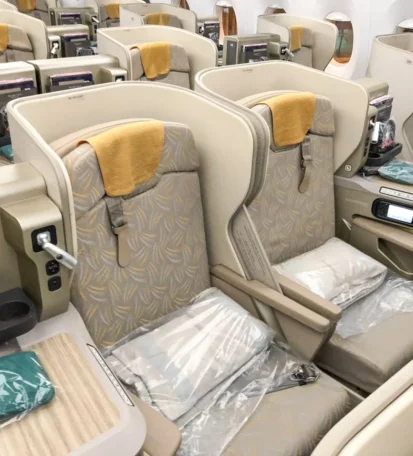
- Flight Class Rules: Define exactly when an employee is permitted to fly Business Class. A standard small business rule is: “Economy for all domestic flights; Business Class is permitted only for international flights exceeding 8 hours.”
- Expense Submission Deadlines: State clearly that all manual expenses (if not automated) must be submitted within 14 days of the trip’s conclusion to guarantee reimbursement.
Pro Tip: Do not bury this policy in an HR PDF that no one reads. The best practice in 2026 is to hardcode these rules directly into your software for business travel, so employees cannot physically complete an out-of-policy booking without manager approval.
Step 2: Choose the Right Accommodation Strategy
Small businesses naturally assume that corporate travel means booking standard, nightly hotel rooms via Global Distribution Systems (GDS). While hotels are perfect for one-night sales trips, modern small businesses frequently execute multi-week consulting projects, remote-worker offsites, and long-term relocations.
Forcing an employee to live in a standard hotel room for three weeks is expensive for the company and psychologically draining for the traveler.
The Solution: Corporate Housing & Serviced Apartments Scaling businesses must secure a travel platform that provides access to extended-stay corporate housing. Serviced apartments provide fully equipped kitchens, reliable high-speed Wi-Fi, and dedicated workspaces.
Not only does this drastically improve the employee’s quality of life and productivity, but it also slashes corporate meal budgets, as employees can cook rather than expensing three restaurant meals a day. Furthermore, accessing long-term corporate housing generally exempts the company from short-term transient occupancy taxes, lowering the total cost of the trip.
Step 3: Shift from “Reactive” to “Proactive” Expense Management
The traditional expense report is dead. Forcing junior employees to float thousands of dollars on their personal credit cards damages company morale, and forcing your finance controller to chase down lost receipts wastes valuable labor hours.
To optimize travel booking for small business, you must shift your financial model from reactive (auditing receipts at the end of the month) to proactive (controlling the spend before the purchase).
Implement Virtual Corporate Cards Instead of passing around a physical company credit card, modern travel platforms allow finance managers to instantly generate virtual corporate cards. These digital 16-digit cards can be pushed directly to an employee’s Apple Pay or Google Wallet.
More importantly, these cards enforce your corporate credit card policy automatically. A manager can program a virtual card with a strict £500 limit, restrict it to be used only at restaurants and transit stations, and set it to self-destruct the moment the employee’s trip ends.
When the employee taps their phone to pay for a client dinner, the digital receipt and transaction data instantly sync to your accounting software (like Xero or QuickBooks). The expense is reconciled in real-time, completely eliminating the month-end reporting cycle.
Step 4: Stop Abandoning Recoverable VAT and Unused Tickets
Small businesses leak massive amounts of capital through poor administrative tracking. Two of the biggest culprits are abandoned VAT and unused flight vouchers.
Recovering International VAT If your employees travel internationally, you are paying Value Added Tax (VAT) on accommodations and meals. Most countries allow businesses to legally reclaim this tax (which can be up to 20% of the purchase price). However, to reclaim it, you need perfectly itemized, legally compliant tax invoices. Consumer sites like Expedia rarely provide these. By mandating that employees use a centralized Travel Management Company (TMC) that generates compliant invoices automatically, small businesses can easily reclaim thousands of dollars in passive revenue.
Banking Unused Flight Credits When an employee cancels a flight booked directly on an airline’s website, the credit voucher is sent to their personal inbox. In unmanaged systems, these credits almost always expire unused. A centralized TMC platform captures canceled tickets automatically and banks them at the company level. The next time any employee attempts to book a flight with that airline, the system forces them to use the banked credit first.
Step 5: Implement Live Duty of Care Tracking
In the post-pandemic era, corporate duty of care is not optional. Employers have a legal and ethical mandate to protect the physical well-being of their traveling staff.
If your team is booking their own flights on consumer websites, your operations team has zero centralized visibility into their geographic location. If a transit strike, extreme weather event, or localized emergency occurs in a destination city, you cannot protect employees you cannot locate.
Modern small business travel services include live duty of care dashboards. These platforms provide an interactive global map showing the live flight status and hotel location of every employee, while simultaneously pinging travelers with automated risk alerts regarding their destination.
The Verdict: Graduating from DIY to a Modern TMC
Transitioning from unmanaged spreadsheets to a formalized travel management platform is the highest ROI operational upgrade a small business can make. It protects company capital from rogue spend, completely automates the agonizing expense reporting process, and ensures your team is safe on the road.
However, you do not need to sign a bloated, complex enterprise contract to achieve this.
Scale Your Travel with Clooper
Clooper is engineered specifically for the agile small business. We provide seamless access to global flights, standard hotels, and premium extended-stay corporate housing, all wrapped in a unified dashboard that automates your expenses and enforces your budget limits instantly.
Ready to modernize your corporate travel?
👉 Schedule a live demo of Clooper today to see how we help small businesses travel smarter.